



Updated on 2 September 2026
|
Overview:
|
Not all agents are the same. How do you find the one that's right for you?
Finding the right real estate agent can make a significant difference to your selling experience and final result. With so many agents to choose from, it’s important to look beyond commission rates and marketing promises. The right agent understands your local market, communicates openly and tailors their approach to your goals. Just as importantly, they need to take the time to understand your needs and provide clear guidance throughout the selling journey.
This article explains what a real estate agent really does, how commission works and how to choose someone with the local knowledge, experience and approach that best suits your needs.
Is a real estate agent worth the cost when selling?
A real estate agent is usually worth the cost if they can help you achieve a better sale price, attract stronger buyer interest, and reduce the stress of managing the campaign yourself. The key is not simply hiring an agent, but choosing one with proven local experience, a clear strategy, and a strong track record with properties like yours. In many cases, the right agent more than pays for themselves through a better result and a smoother sale.
What does a real estate agent actually do for me?
A real estate agent does far more than simply list a property and wait for offers. They act as a sales partner who helps you price correctly, advertise effectively, manage buyer interest, negotiate offers, and keep the whole process moving smoothly from start to finish.
For sellers, that means bringing local market knowledge, a clear strategy, and the experience to position your property in a way that attracts the right buyers. They handle inspections, follow up enquiries, sort through the noise, and help create competition so you have the best chance of achieving a strong result. For buyers, they help with property viewings, communication, paperwork, and the practical steps involved in making a purchase.
A good agent also removes a lot of stress from what can be an emotional process. Instead of trying to manage every detail yourself, you have someone coordinating the moving parts, keeping the transaction on track, and helping you make better decisions along the way.
How much commission will I pay my real estate agent in Melbourne?
In Melbourne, real estate agent commission usually falls somewhere around 1.5% to 2.5% of the final sale price, although the exact rate depends on the suburb, property type, and the agent you choose. On a $1 million sale, that could mean around $15,000 to $25,000 in commission, before other selling costs. Because commission is negotiable, it’s worth comparing agents on both fee and service so you can judge overall value, not just the lowest rate.
Why do some real estate agents get better results than others?
Some agents get better results because they bring stronger local knowledge, better marketing, more active buyer networks, and a clearer strategy for pricing and negotiation. Just as important, they communicate well, stay proactive, and adapt their approach to the property and the seller’s goals. The difference between a smooth sales experience and one that feels off is often in the process. Strong agents use better systems, better support, and better judgment, which helps them move faster, solve problems earlier, and avoid the mistakes that can weaken a sale result.
In real estate, the best results usually come from the right combination of experience, preparation, and follow-through. Not just from being the cheapest or most visible agent.

How to choose the right real estate agent in Melbourne
Choosing the right real estate agent in Melbourne is about more than selecting the person with the biggest advertising presence or the highest price estimate. The best agent for you will combine local market knowledge with a genuine understanding of your needs, goals and circumstances. Look for someone who has sold similar homes in your suburb, can clearly explain their sales strategy and provides realistic advice supported by comparable sales. Just as importantly, they should take the time to listen, understand what matters most to you and tailor their approach accordingly — whether your priority is achieving a particular sale price, selling within a specific timeframe or ensuring a smooth experience.
Strong communication, transparency and follow-through are also essential, helping you feel informed and confident throughout the process. If you're still unsure, it can be helpful to watch agents in action before making a decision. Attend open homes, ask questions about how they handle buyer enquiries and pay attention to whether they are proactive, professional and focused on understanding the needs of both sellers and buyers without overpromising.
How to research a real estate agent's track record
When researching a real estate agent’s track record, focus on sales in your suburb, the type of properties they’ve sold, and how those sales compare to your own home. Recent sales matter more because they show the agent is active in today’s market, not just relying on old results or general reputation.
Realestate.com.au and domain.com.au provide great resources to start this process. Both offer an agent search feature that allows you to see results from agents that operate in your area. Simply search your suburb or post code and the platform will provide you with a list of agent profiles. Contained within the profiles are statistics such number of properties sold, median sale price, median days advertised and agent reviews. Please keep in mind that this is third party, data may not be 100% accurate and statistics could differ slightly across platforms.
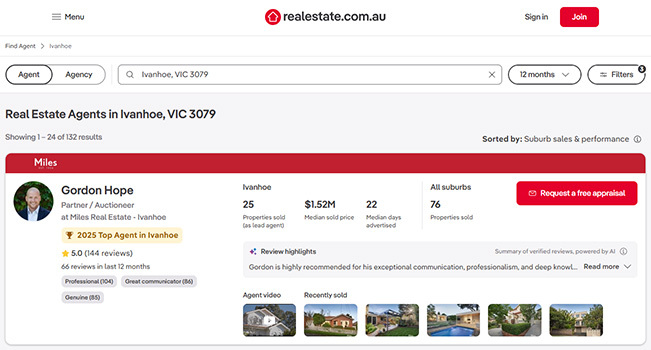
Realestate.com.au is the more widely used platform in Victoria. As a result, it is probably the better platform to use for Melbourne based sellers. REA also have an easy to use time filter that lets you see how an agent has performed over the last 3, 6, 12 and 24 months. This allows you to assess how active an agent is in your area. Both platforms have an agency search feature that presents the same statistics at an agency level. This makes it easy to identify who are the dominate real estate agencies in your suburb.
It also helps to read reviews. That can tell you a lot about how the agent communicates, handles pressure, follows through, and whether they are honest and realistic throughout the campaign.
Finally, meet the agent and ask direct questions about their process. A strong agent should be able to explain their strategy, local knowledge, buyer network, and workload clearly, so you can judge whether they have the time, experience, and focus to manage your sale properly.
Following these steps can help you find the best real estate agent in your suburb.
What questions should I ask a real estate agent before hiring?
Before hiring a real estate agent, ask questions that help you understand how they work, how they communicate, and whether they have the experience to sell a property like yours. Focus on their local results, recent comparable sales, marketing plan, fee structure, and how they handle buyer interest. The best agent should be able to answer clearly, back up their advice with evidence, and make you feel confident they’ll manage the sale in your best interests.
Some questions you could ask include:
- How well do you know this area?
- What recent similar properties have you sold?
- How would you market my property?
- How will you communicate with me during the process?
- How do you handle negotiations and multiple offers?
Red flags to avoid when hiring a real estate agent
When hiring a real estate agent, the biggest red flags are unrealistically high price estimates, vague fees, poor communication, and a lack of recent local results. A strong agent should be able to back up their advice, explain their costs clearly, and show real experience with properties like yours. If anything feels unclear or overly polished, it is worth asking more questions before you sign.
What should my real estate agent do before listing my house?
Before listing your house, your real estate agent should help you focus on the improvements that will make the greatest impact, rather than the most expensive ones. This usually includes identifying any minor repairs, offering guidance on presentation, assisting with paperwork, and providing honest advice about what is and isn’t worth spending money on. A good agent should also help you understand your likely price range so you can prepare with confidence and avoid overcapitalising.
Your agent should also ensure you have engaged a conveyancer or solicitor so they can prepare the Contract of Sale and Section 32 before the property goes to market. In addition, they should clearly discuss your marketing strategy and associated fees. Finally, they should make sure you are clear on campaign timing, sales campaigns expectations and next steps before your property is officially listed.

How do real estate agents price properties?
Real estate agents price properties by combining recent local sales, the home’s individual features, and current market conditions. The goal is to set a price that is realistic, evidence-based, and aligned with the seller’s end goal.
The process usually starts with comparing your property to similar homes that have recently sold nearby. Agents look at things like land size, building size, condition, renovations, layout, and location, then adjust for any differences so the suggested price reflects the market as accurately as possible.
They also take broader market factors into account, including buyer demand, stock levels, interest rates, and seasonal trends.
The right pricing strategy depends on the seller’s objectives. Some vendors want a quicker sale, while others are focused on creating competition and giving the market time to push the price higher. A good agent will explain the reasoning behind their price guide so you can make an informed decision.
Should I use a large or small real estate agency?
In theory smaller agencies provide a more personal, hands-on experience, while larger agencies may offer broader marketing reach and more resources. In the end however, the agent matters most. Focus on their local knowledge, recent results, and how confidently they can explain their strategy for your property.
How do I spot an inexperienced real estate agent?
An inexperienced real estate agent is not always obvious at first, but there are usually clear signs if you know what to look for. The most common red flags are weak local knowledge, vague pricing advice, poor communication, and a lack of confidence when it comes to negotiation or strategy.
One of the first things to watch for is whether the agent can speak clearly about your local market. A strong agent should be able to explain recent comparable sales, buyer demand, and how your property fits into current conditions. If they rely on broad headlines, give unsupported price estimates, or avoid specifics, that is usually a warning sign.
You should also pay attention to how prepared they are. An inexperienced agent may arrive with little research, struggle to answer basic questions, or seem unsure about the next steps. Good agents should have a clear plan for marketing, communication, and managing offers.
Communication is another important clue. If the agent is slow to respond, hard to reach, or does not follow through on what they say they will do, that can point to inexperience or disorganisation. Sellers especially should expect regular updates, while buyers should expect timely feedback and clear guidance.
It is also worth noting how well the agent handles negotiation. Inexperienced agents may be overly passive, too pushy, or unable to explain how they would manage competing offers. A confident agent should be able to show both market knowledge and practical negotiating skill.
What happens if I'm unhappy with my real estate agent's service?
If you are unhappy with your real estate agent’s service, the best first step is to raise the issue directly with the agent or agency and clearly explain what needs to be fixed. In many cases, problems such as poor communication, missed follow-up, unclear fees, or failure to act on instructions can be resolved without needing to escalate further.
If that does not work, document everything carefully. Keep copies of emails, texts, contracts, invoices, dates of conversations, and any promises or actions that were not followed through. A clear record makes it much easier to explain the problem and support your complaint if it needs to be taken further.
The next step depends on the type of issue and where the property is located. In Australia, complaints may go to a consumer affairs body, fair trading office, licensing board, or another dispute resolution service depending on the state or territory.
It also helps to be specific about what outcome you want. For example, you may want a written explanation, correction of inaccurate information, a fee review, better communication, or a formal investigation. Being clear about the result you are seeking can make the process quicker and more effective.
Conclusion
Choosing the right real estate agent can make a real difference to both your sale price and your overall experience. The best agents bring local market knowledge, strong communication, and a clear sales strategy that helps you attract the right buyers, negotiate confidently, and avoid unnecessary stress.
While commission is an important factor, it should never be the only one. A low fee does not always mean better value, and the strongest results usually come from an agent with proven suburb experience, recent comparable sales, and a track record you can verify through research and reviews.
Before you commit, take the time to compare agents, ask direct questions, and look closely at how they present themselves, explain their process, and respond to your concerns. In the end, the right agent should give you confidence that your property is in capable hands and that their fee is justified by the result they can help you achieve.
Considering selling your property?
Within the Banyule suburbs, Miles Real Estate is your local specialist. For over a hundred years, we've helped generations of property owners succesfully navigate the property selling journey. We take the time to understand your goals and provide advice tailored to your circumstances.
Contact us today to speak to one of our local experts.